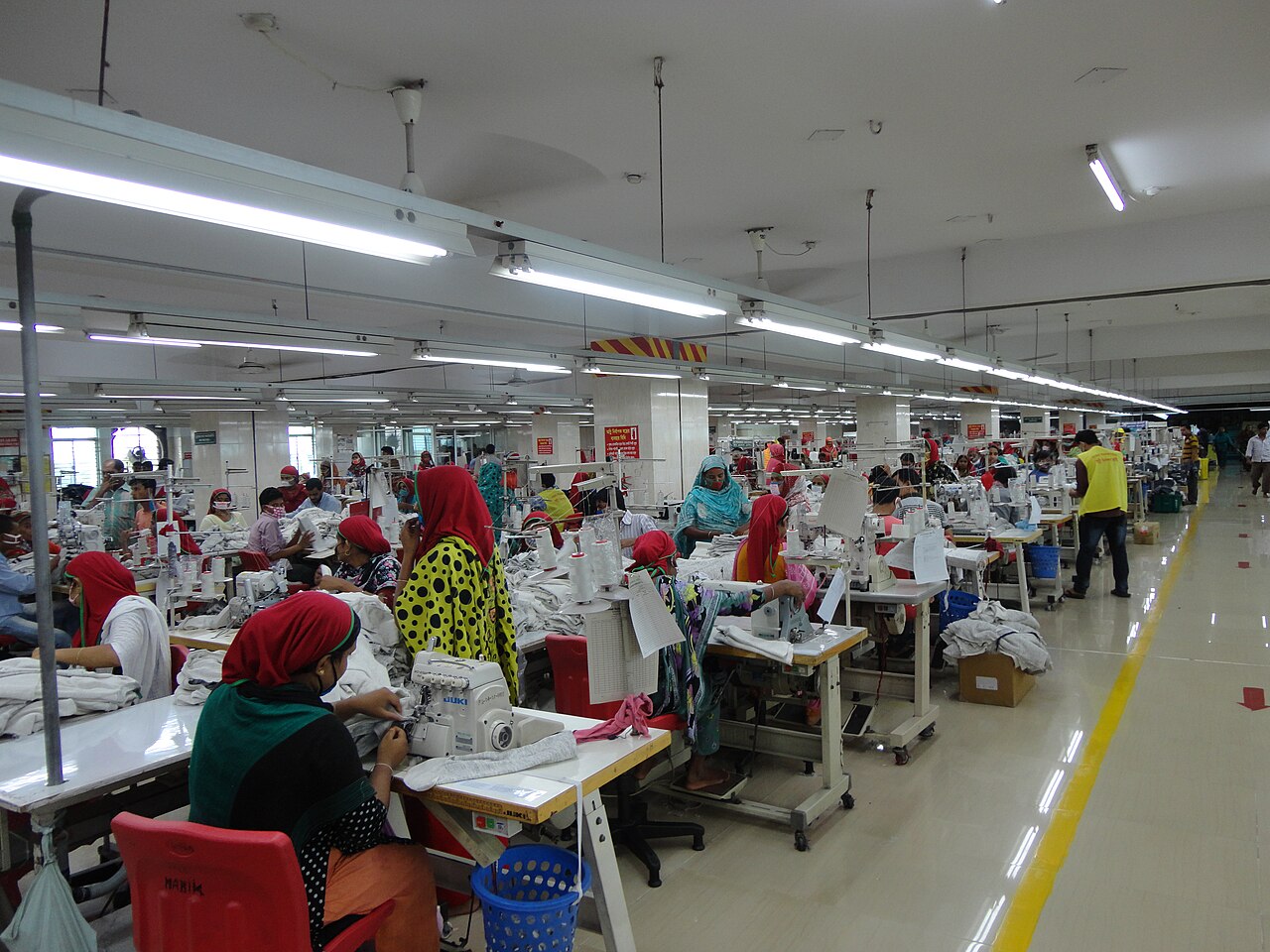
Bangladesh said on 1 November 2026 that it would form a board to review garment workers’ pay, Reuters reported.
Workers’ demands and the government response
The move follows protests, factory closures and clashes with police. Workers demand a monthly minimum of 30,000 taka against the current 12,500 taka, citing higher living expenses. The labour minister linked the board’s formation to discussions with worker and industry representatives. The announcement concerns a pay review; it does not establish that the government has adopted the protesters’ requested amount. Business Recorder
What should a wage review measure?
The International Labour Organization provides a framework for understanding such negotiations: workers’ and families’ needs on one side, and economic conditions and sustainable enterprises on the other. It recommends evidence on wage distribution, living costs and regional differences, productivity and growth. It also warns that leaving minimum pay unchanged while prices rise erodes purchasing power and calls for monitoring adjustments after implementation. In that framework, agreeing a nominal figure is only part of the task: affordability, compliance and actual labour-market effects also matter. International Labour Organization
A living wage and the evidence behind it
ILO defines a living wage as pay sufficient for a decent standard of living for workers and their families in the national context, earned during normal working hours. Estimation requires household surveys, local prices and representative data, with employer and worker participation, transparent methods, updates and technical review. Distinguishing a statutory minimum from living costs is therefore useful: measuring needs informs negotiations but does not replace national wage-setting decisions. These are general principles for understanding the Bangladesh debate, not an ILO estimate of the appropriate wage for this industry today. International Labour Organization