Washington, DC, and Virginia sued on Saturday to stop construction of the proposed arch, ABC News reported.
Court request ahead of construction
The governments requested a temporary restraining order, alleging that the project lacks congressional authorization and threatens traffic, the environment and emergency preparations. ABC reported that the administration had told the court work could begin after final design approval. These are the parties’ requests and arguments; the report does not announce a ruling blocking or invalidating the project. ABC News
Why planning jurisdiction matters
The National Capital Planning Commission explains that the Commemorative Works Act requires site and design review by the commission and the Commission of Fine Arts for memorials on National Park Service or General Services Administration land in and around Washington. The process includes consultation with the memorial advisory body. Projects on Defense Department or other federal land can instead require review under the National Capital Planning Act, while special legislation may prescribe a separate procedure. This explains the agencies’ jurisdiction; it does not determine the legality of Trump’s proposed arch. National Capital Planning Commission
A corridor of transport and remembrance
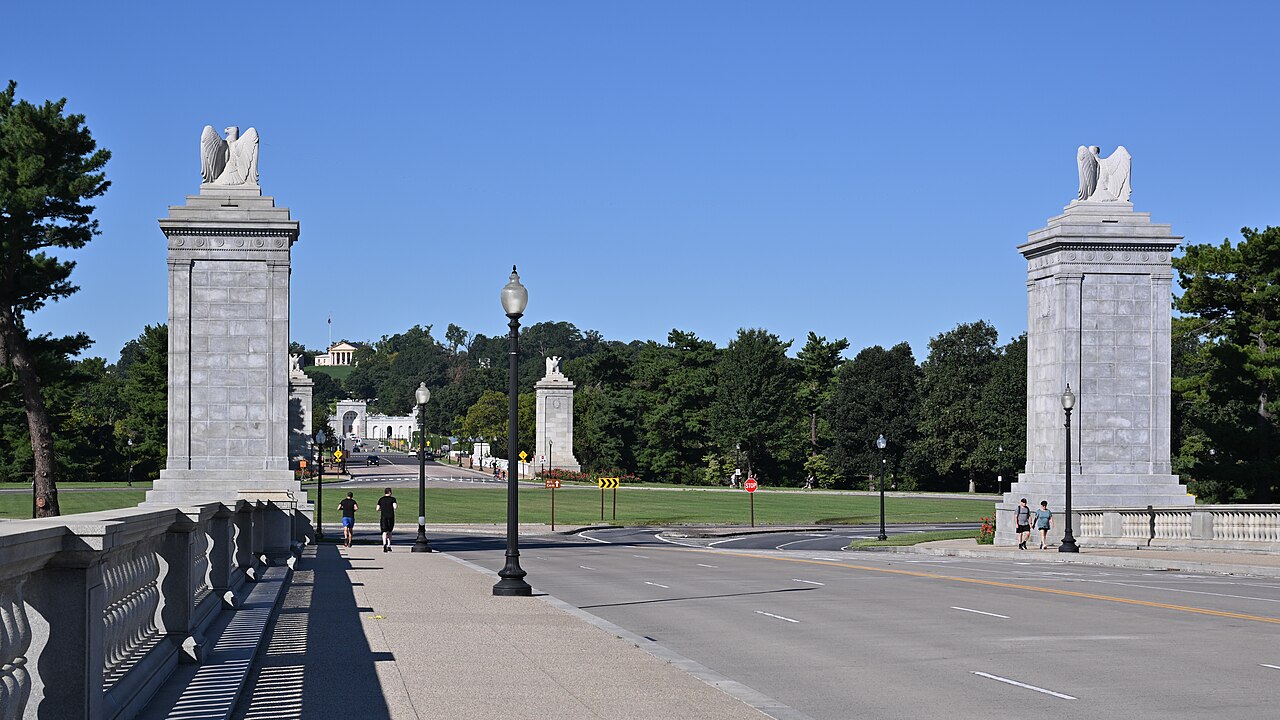
The National Park Service describes Arlington Memorial Bridge and Memorial Avenue as a connection between Washington’s Lincoln Memorial and Arlington National Cemetery in Virginia. The bridge was designed to symbolize reunion between North and South after the Civil War, and pedestrians and cyclists also use the corridor to travel between memorials. Visitor guidance warns of merging lanes and entrance and exit ramps around Memorial Circle and advises caution at crossings. The location therefore combines an active transport route with connected commemorative places, providing geographical context for the lawsuit’s concerns about movement and access. US National Park Service