The Palestinian news agency WAFA reported a man’s death on Sunday morning, November 1, from earlier wounds in central Gaza. UN reporting separately describes gaps in shelter and assistance. The newly reported death must be distinguished from humanitarian measurements covering earlier periods, so that background information is not presented as an unverified updated total.
The death as reported by WAFA
Citing medical sources, WAFA identified Ibrahim Adel Saeed and said he had been wounded by Israeli tank fire during an incursion into al-Musaddar village several days earlier. Its report appeared at 08:47 a.m. on November 1. This is an attributed account, not an independent field investigation. The report supplies neither an incident-specific Israeli response nor an exact injury date; neither is invented here. Palestinian News and Information Agency WAFA
A separate al-Maghazi report, not an automatic combined tally
In a separate report published at 11:54 a.m. on October 31, WAFA said four Palestinians were injured by Israeli fire in al-Maghazi camp in central Gaza. The different location, incident and reporting time require separate treatment. Those injuries are not added here to a purported comprehensive two-day casualty figure. A reliable aggregate requires checking each statement’s scope and subsequent revisions, rather than summing scattered reports. These accounts provide attributed incident reporting, not a complete count for the entire territory. Palestinian News and Information Agency WAFA
Food assistance coverage and funding gaps
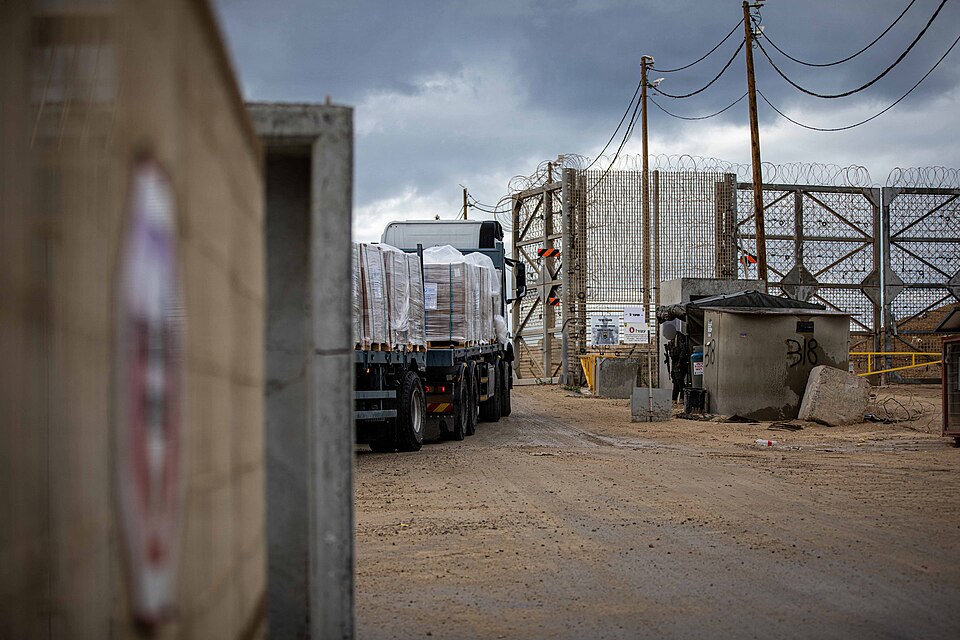
OCHA’s report titled October 22 and published October 26 said funding shortages were limiting monthly food assistance to fewer than one million of Gaza’s estimated 2.1 million people from October onwards. It also reported that 60% of shelter funding needed for cold and rainy-season preparations remained unmet. These are the report’s findings, not measurements taken by this publication on Sunday. They help explain why the arrival of an individual shipment is insufficient by itself to establish whether needs are being met throughout a month. United Nations OCHA occupied Palestinian territory
Winter adds a risk at displacement sites
OCHA’s report titled October 15 and published October 19 estimated that about 950,000 people lived at displacement sites facing medium or high flood risk, including more than 400,000 at high risk. Its main reporting period was September 29–October 12, with specified exceptions. These figures are dated winter-preparedness context, not a November assessment. The report identifies access to suitable land, materials and machinery among the obstacles to prevention, alongside assistance within shelters themselves. United Nations OCHA occupied Palestinian territory
Humanitarian reading: what the context adds
A death concerns an individual and a family, while aid indicators describe the capacity to respond to wider needs. Presenting both helps explain the setting in which incidents occur, but does not establish a specific causal connection between aid shortages and this death. No medical cause or treatment delay absent from the source is attributed here. Keeping those limits clear preserves the value of context without asking it to prove more than the evidence supports.
How to read subsequent updates
The incident date, publication date and statistical reporting period need to remain distinct. A source may announce a death today following an earlier injury, or release an assessment after its monitoring period has ended. That does not place every development on the same day. For relief operations, following continuity, coverage and changes in funding gaps is more useful than comparing isolated shipment headlines. This approach identifies what a subsequent update should check without pretending to know developments the cited sources have not reported.