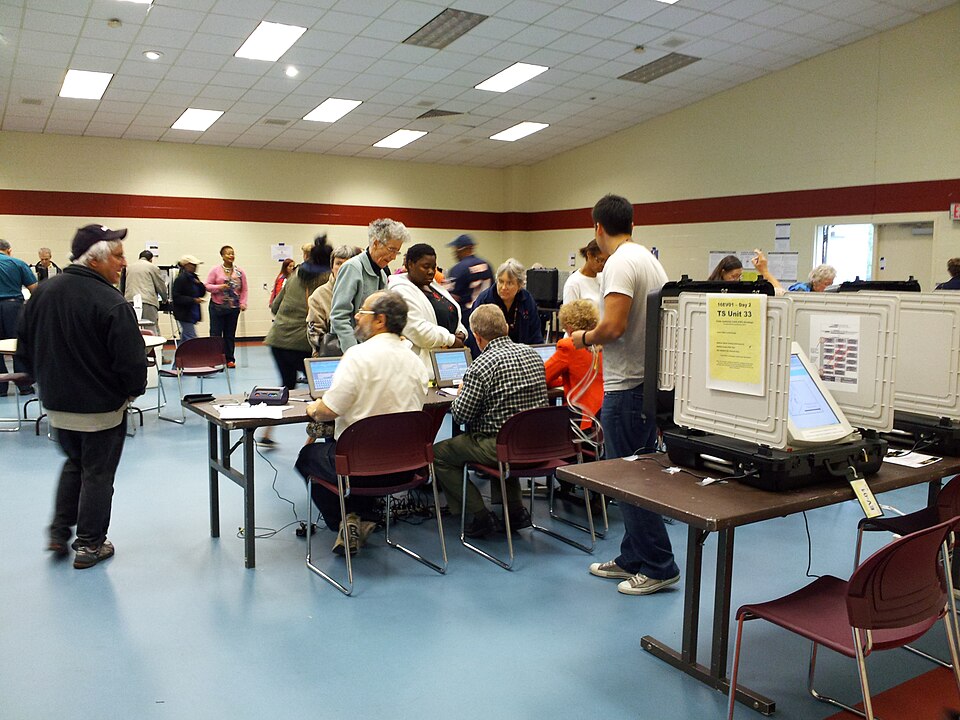
There is no single closing time for every form of early voting across the United States. Official schedules distinguish between the end of voting before Election Day and Election Day itself. This update is dated November 1, 2026; all hours below refer to the local time of the jurisdiction identified.
New York City: final early day before Tuesday voting
New York City’s Board of Elections lists early voting from October 24 through November 1, with Sunday’s final session running from 9 a.m. to 5 p.m. Election Day voting on Tuesday, November 3 runs from 6 a.m. to 9 p.m. The page supplies separate early-voting and Election Day location lists. Readers should therefore consult the list appropriate to the date rather than assume a previously used location is their Tuesday polling place. This is the city’s schedule, not a nationwide timetable. New York City Board of Elections North Carolina State Board of Elections New Jersey Division of Elections
New Jersey: Sunday early voting until 6 p.m.
New Jersey’s election division sets in-person early voting for October 24 through November 1, with Sunday hours of 10 a.m. to 6 p.m. No appointment is required, and counties designate locations. Returning a mailed ballot follows separate instructions: approved drop boxes and the county Board of Elections office have an 8 p.m. Election Day deadline. Machine-voting hours should not be confused with the rules for returning a ballot already received through the mail. Voters should consult the official location and return-method instructions. New Jersey Division of Elections New York City Board of Elections
North Carolina: the early period has ended
North Carolina’s State Board of Elections says its in-person early-voting period ended at 3 p.m. on Saturday, October 31, after beginning October 15. The same official notice identifies Tuesday, November 3 as the general election date. An announcement that early voting has finished must not be presented as meaning the whole election is over. Remaining arrangements should be checked with state or county election officials, rather than applying the opening hours of New York City or New Jersey to North Carolina. North Carolina State Board of Elections New York City Board of Elections
Why the terminology and rules vary
USAGov explains that most states permit in-person voting during a designated early period, while some may require an absentee-ballot request for that route. It directs voters to state or local election offices for timing, locations and rules. Information may consequently appear under absentee voting rather than an early-voting heading. This procedural context helps readers find the right official page; it does not replace current state instructions or establish that every voting method is available to every individual. USAGov
Checking registration and the polling place
The federal guide recommends checking registration status, name, address and polling place through the relevant state website. It explains that inactive registration can require additional steps or lead to a provisional ballot. A registration problem does not have the same remedy or deadline everywhere. The appropriate election office should address the individual situation. This article does not determine anyone’s eligibility or promise that new registration remains available after a local deadline. USAGov
Reading the comparison without overgeneralising
Putting these schedules together reveals different stages: one jurisdiction still opens early-voting sites on Sunday, while another ended that period on Saturday, with the general election date still ahead. An accurate closing-time notice therefore needs the location, voting method, date and hour. Removing one of those details can turn locally correct information into misleading advice for somebody elsewhere. The official links are particularly important when a reader arrives through a search result that shows only a headline or an isolated sentence.
A timetable is not an election forecast
This comparison describes procedures published by election authorities; it does not infer a party or candidate lead from them. Nor does it equate the number of people voting early with votes won by a particular side. Assessing an outcome requires results and the applicable confirmation process. The purpose here is narrower: to explain where selected early periods finish and how their rules differ. Readers opening this article after November 1 should note its date and return to the current official schedule.