You may own a shirt you like on its own but rarely wear because you cannot decide what goes with it. The answer is not necessarily another purchase. Separate three questions: what is actually available, which combination you want to try, and what would make you comfortable wearing it for a particular occasion. Here, coordinating colours is a process of choosing and observing, not a verdict on someone's appearance or a list of colours forbidden for their skin.
This guide builds combinations from existing clothes and records preferences without turning taste into invented scientific scores. The examples and figures are fictional, not findings from people or product tests. No paid tool or new wardrobe is required, and there is no assumption that every culture or occasion shares one definition of looking good.
Define the wearing situation before the colour question
Start with something specific: a working day, an informal meeting, or packing for a short visit. Write down actual requirements such as comfort, movement, coverage, and having the garment clean on the day. If the occasion has instructions, check those rather than inferring them from general opinions about a colour being “formal” or “inappropriate”. Colour is one part of a larger decision.
Choose the purpose of your experiment too: using a neglected garment, reducing decision time, or trying more contrast than usual. Those goals produce different definitions of success. Finding one combination you will really wear may be more useful than generating the largest theoretical list. You can reject a suggestion you dislike even if it looks orderly on paper or other people approve of it.
Make a short inventory with recognisable names
Select a manageable group that you can lay out together rather than emptying everything. Give each item a name such as “ivory shirt” or “wide navy trousers”, adding a stable identifier where colours repeat. “Blue” alone is not enough for three different shirts. An identifier helps you recreate the same combination later without guessing which garment you meant.
Record its type and status for this exercise: available, needs cleaning according to its label, or unsuitable for the occasion. Do not count an unavailable garment in tomorrow morning's plan. This is a temporary decision aid, not a permanent stock-control system or an instruction to discard clothes. Remove the list when it no longer serves you.
If distinguishing some colours is difficult, use names, identifiers, texture and a consistent storage location rather than coloured dots alone. Ask someone you trust for a description if useful, while retaining your own decision. Precisely naming subtle shades should not be a requirement for enjoying clothes you already like.
Use colour vocabulary as suggestions, not orders
Adobe explains adjacent and opposite colour relationships on the colour wheel. Use those words to generate ideas, not as certification that a combination must suit you. You need not reproduce a digital wheel precisely in fabric or subscribe to an application before comparing two garments you own.
Choose working descriptions that make sense to you: similar shades, a clear light–dark difference, or a small item with a prominent colour. Keep terminology as simple as the decision allows. A light shirt and dark trousers may achieve your goal without naming a theoretical relationship, while two similar screen-based ideas may feel different when worn.
Avoid declaring a colour forbidden for a gender, age or skin colour. Likewise, do not treat popular personal colour categories as an objective diagnosis from a phone photograph. You can try a colour near your face if that matters to you and record your preference without claiming a universal result.
Choose an anchor garment and change one element
Start with the shirt you want to use. Place it with two existing alternatives, then compare the first and second combinations while keeping the remaining elements reasonably consistent. If you change the shirt, shoes, bag and lighting every time, identifying what you preferred or want to adjust becomes harder.
Begin without extras, then try one addition if desired. There is no compulsory number of colours or body-area percentage to calculate. A small comparison makes the change memorable: “I replaced the prominent scarf with a quieter one,” rather than a number supposedly proving superiority. Comfort, preference and the occasion remain valid reasons for choosing.
Record viewing conditions without claiming a laboratory test
AMANN explains that samples matching under one light can differ under another. A brief impression in one place is therefore not a universal guarantee. For your home exercise, note where and when you viewed the combination instead of inventing a technical description of a lamp you do not know.
If the choice looks different where you wear it, record what you noticed: “I prefer this combination in the meeting room,” or “I do not like how similar these pieces look here.” These are personal observations, not colour measurements or a diagnosis of why the difference occurred. Professional equipment is unnecessary for deciding whether you want to wear your clothes.
A photograph can remind you of the arrangement, but it is not a fabric sample or a promise that a new purchase will match. Name the file with the garments and date; avoid beautifying filters when you want a reminder of your observation. Do not share images of people or private homes without permission. A picture of the items alone may be sufficient.
A calculation: possible pairs are not ready outfits
Imagine three shirts and two pairs of trousers. There are mathematically 3 × 2 = 6 possible shirt–trouser pairs. That does not make all six comfortable, appropriate or available on the same day. List the six pairs and check them instead of announcing six successful outfits before trying them.
| Fictional pair | Decision for this occasion | Recorded reason |
|---|---|---|
| Shirt A with trousers 1 | Ready | I prefer it; both items are available |
| Shirt A with trousers 2 | Needs viewing | I have not tried the pairing |
| Shirt B with trousers 1 | Unavailable today | The shirt is being cleaned |
| Shirt B with trousers 2 | Unavailable today | The same shirt is unavailable |
| Shirt C with trousers 1 | Ready | Acceptable to me for this occasion |
| Shirt C with trousers 2 | Not selected | I do not currently prefer it |
The result is two ready, one needing viewing, two unavailable and one not selected: 2 + 1 + 2 + 1 = 6. Removing shirt B from available items leaves two shirts and two pairs of trousers, or four possible pairs, not four ready outfits. That distinction matters when planning a week rather than listing possibilities.
Details and patterns: describe what you want to try
For a patterned item, choose one aspect as your starting point rather than trying to represent every colour with an extra garment. In an optional example, try existing trousers with a patterned shirt and add the bag later. This is not a law about patterns; it reduces simultaneous decisions so you can identify your preference.
Decide whether you want repetition or a deliberate difference. Different shoe and bag colours are not automatically a mistake, and matching shop colour names do not describe your actual combination adequately. State the aim in your words: “I want the patterned piece to stand out more,” or “I want something I need not reconsider each morning.” Assess the choice against that aim.
A new purchase starts with a specific gap
If a favourite garment fits none of your preferred combinations, do not immediately conclude that shopping is necessary. Try what you own, then describe what is missing if a need remains: garment type, occasion and the items you would wear with it. That is more specific than buying an attractive colour alone and discovering that it creates the same unanswered question.
In the example, adding a fourth shirt to three shirts and two pairs of trousers increases theoretical pairs from six to eight: only two new pairs. The increase proves neither financial value nor quality, and neither pair might suit the occasion. Separate counting possibilities from spending decisions. Check actual item information and the shop's policy if you decide to buy.
Make your result easy to use later
Save two or three chosen combinations rather than a huge photo archive you never revisit. Record the garments, occasion and availability condition beneath each. If you later do not wear one, note why: weather, comfort, an unavailable item or changed preference. Non-use does not prove the colour is bad; the cause may have nothing to do with colour.
When asking for feedback, make it specific: “Which is closer to my understated goal?” rather than requesting a verdict on your entire appearance. Treat the answer as opinion. A few votes do not become an objective study. Keeping only your own notes is fine, especially if sharing adds pressure rather than helping you choose.
Final checklist and sources
- The occasion and goal are defined, and garments are actually available.
- Names or identifiers allow me to recreate the combination without relying on colour alone.
- I distinguish mathematical possibilities from combinations already selected.
- I record personal observations without generalising to other bodies or cultures.
- I do not treat a photograph as a colour sample or guarantee for another product.
- Any proposed purchase answers a specific need, not merely a desire for more combinations.
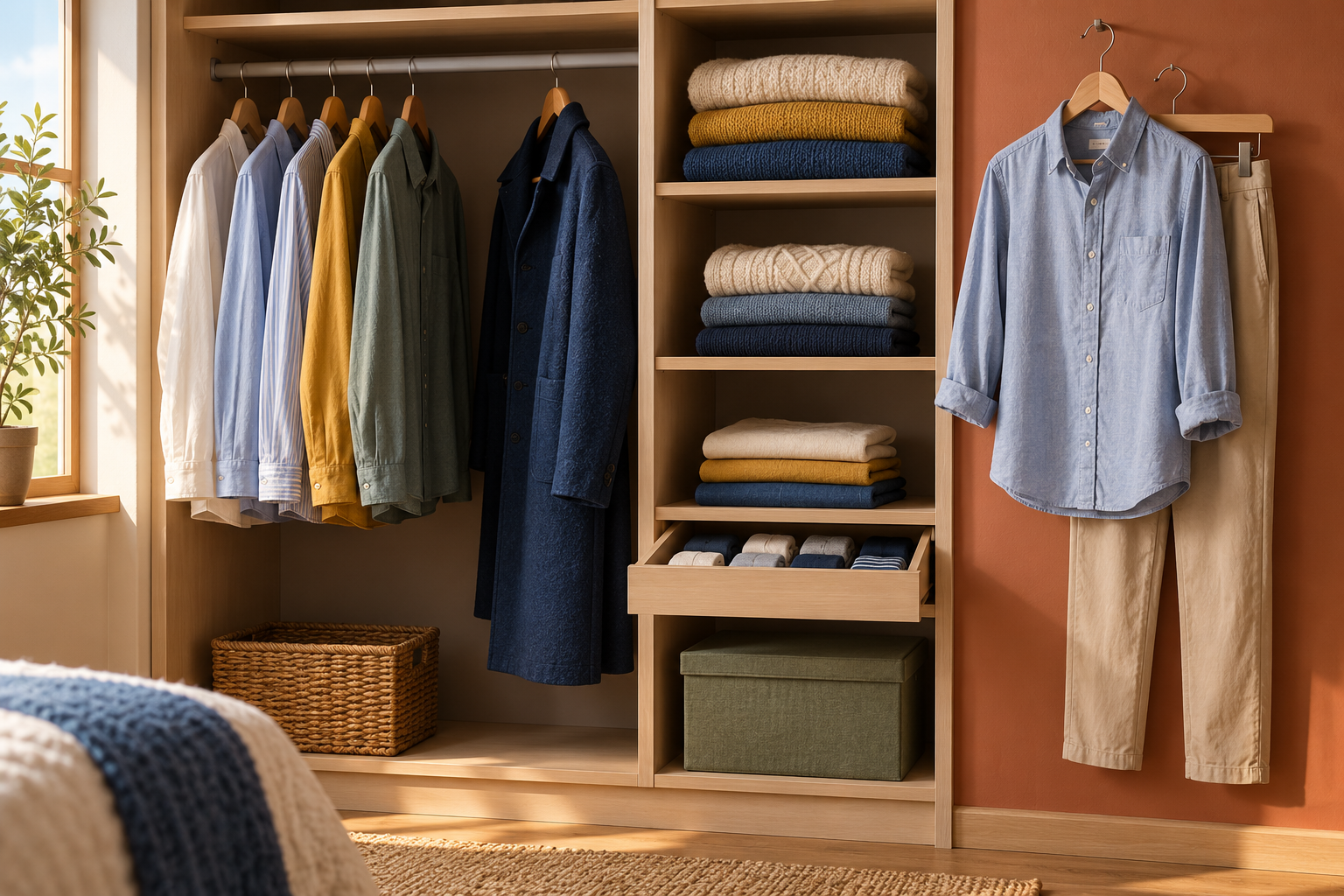
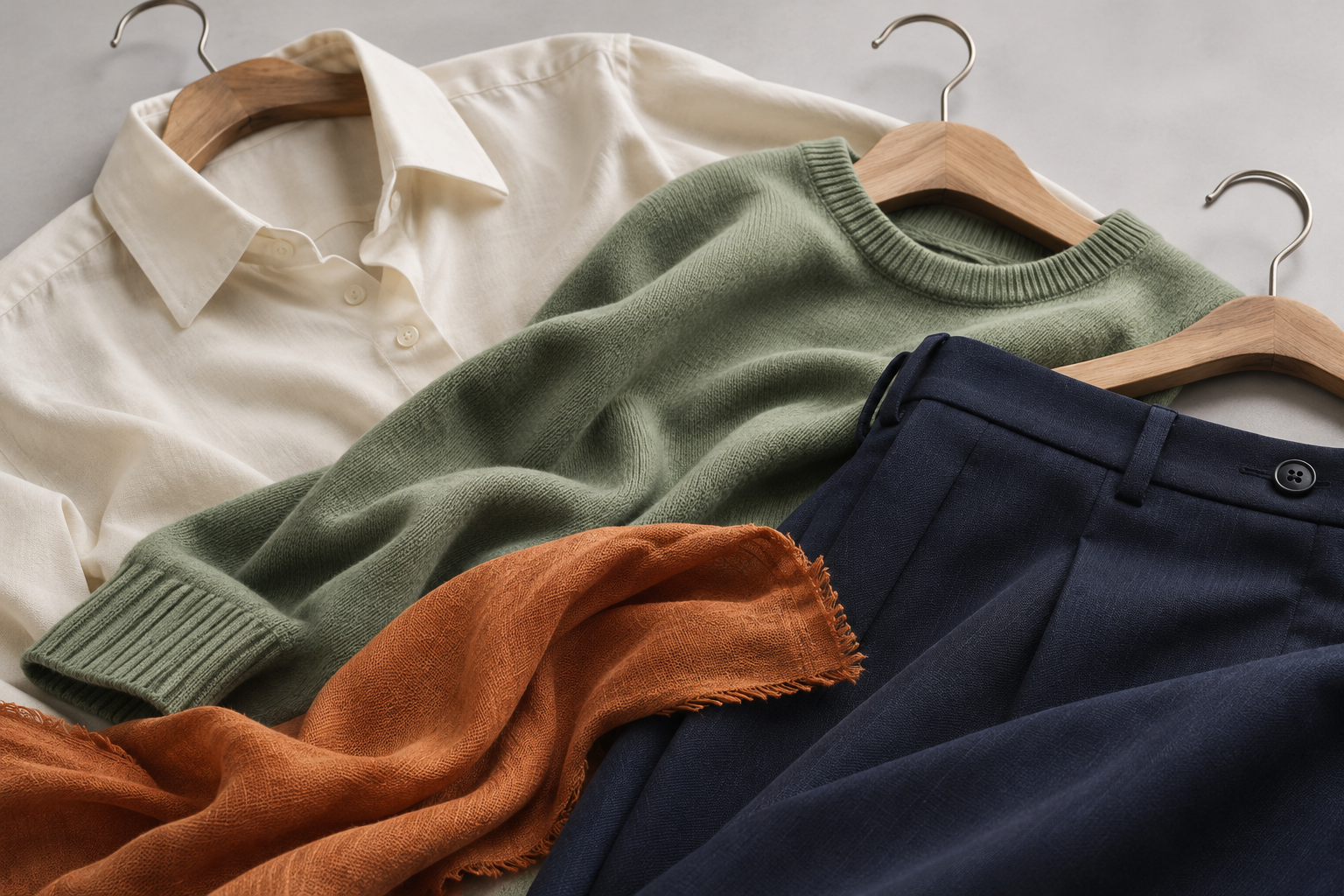
The linked sources were read on 2 November 2026. The inventory method, table and arithmetic are original editorial examples, not a consumer study. The generated image illustrates ivory, muted green and navy clothes with a rust scarf; it does not show tested products. This content was prepared with AI assistance and has not received independent human editorial review.