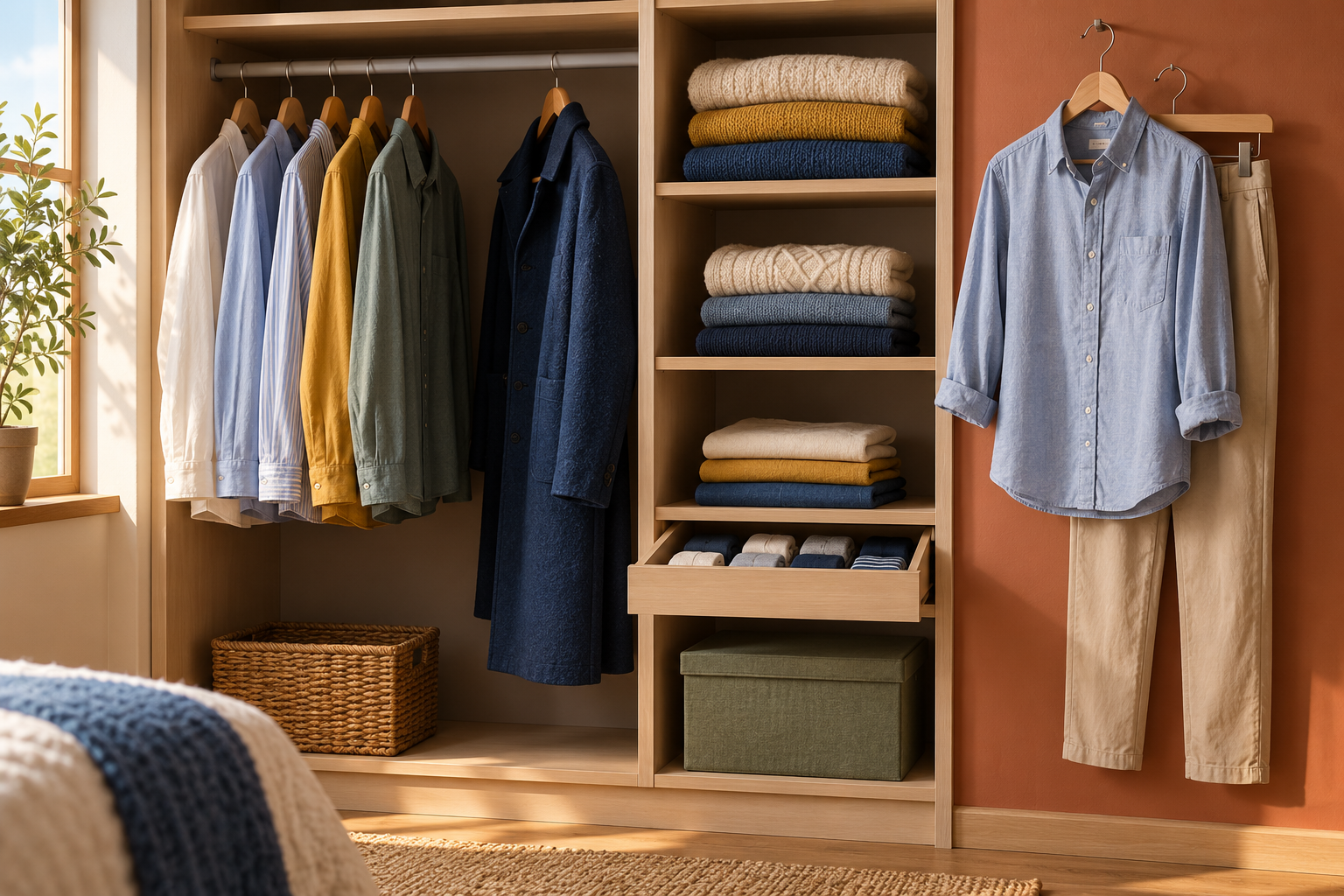
An organised wardrobe is not simply one that looks attractive when its doors open. It lets you choose clothes and put them back without dismantling the arrangement every morning. Begin with a specific question: are similar items difficult to distinguish, is the piece you need hidden, or are ready-to-wear clothes mixed with items needing attention? The answer changes the plan. Buying a wardrobe or storage boxes need not come first.
This guide focuses on clothing inventories, readiness, retrieval, and combinations made from what you already own. It does not explain furniture installation or changes to its load capacity, and it sets no ideal item count. The tables and examples are original organisational suggestions, not measured household tests or promises to save a particular amount of time.
Begin with a category you can finish
Choose a manageable group, such as work shirts or clothes worn at home, instead of emptying everything onto the bed. Establish a clear temporary sorting area, then return that category before starting another. If time is limited, finishing one drawer is more useful than leaving the entire wardrobe scattered without a plan for putting it away.
Describe the problem in observable terms: “I need to find a ready-to-wear shirt without moving several piles.” Avoid making “a perfect wardrobe” the target, because completion becomes impossible to judge. Keep the room usable and necessary belongings accessible; sorting should not create an enduring obstruction to ordinary movement.
What the sources contribute
The IKEA guide connects clothing organisation with garment type and access.
The Woolmark guide distinguishes hanging woven wool from folding knitted wool.
Consult the individual garment's instructions when deciding how to store it. A uniform appearance should not override different materials' requirements. A commercial source does not mean you need its products. Use relevant information to understand constraints, then build an arrangement around your actual clothing, available space, and daily use.
Record purpose and condition, not just a name
A paper list or simple private file can hold the inventory. You do not need to photograph yourself or upload personal information to an external service. A distinctive description, such as “blue shirt with thin stripes,” can be enough alongside purpose, condition, and location. Add a photograph of the item alone if useful, and omit details that support no actual decision.
| Imaginary item | Purpose | Current state | Next action |
|---|---|---|---|
| Blue striped shirt | Work | Ready | Clear place within work clothes |
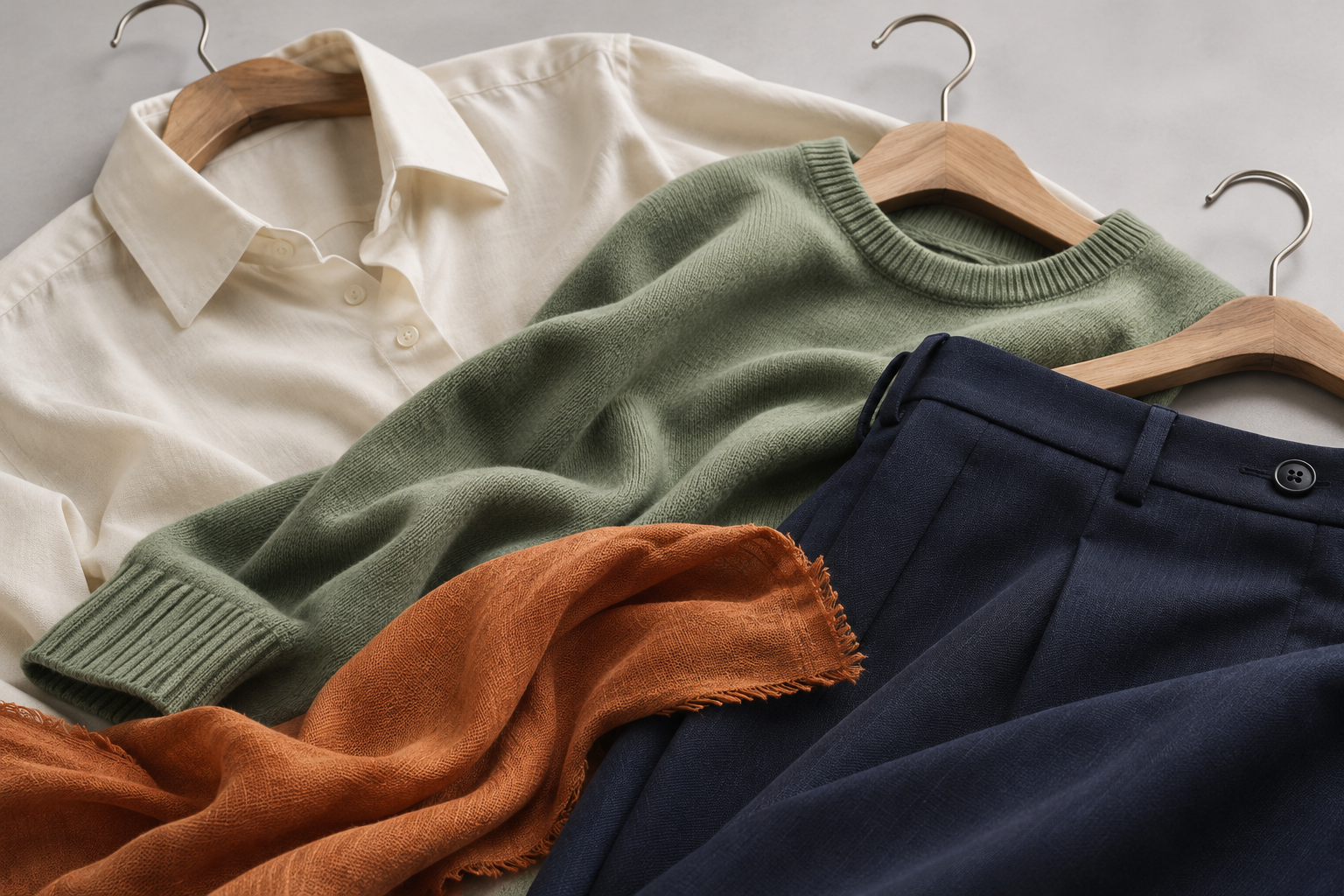
| Green sweater | Cooler weather | Needs care according to its label | Complete that care before marking ready |
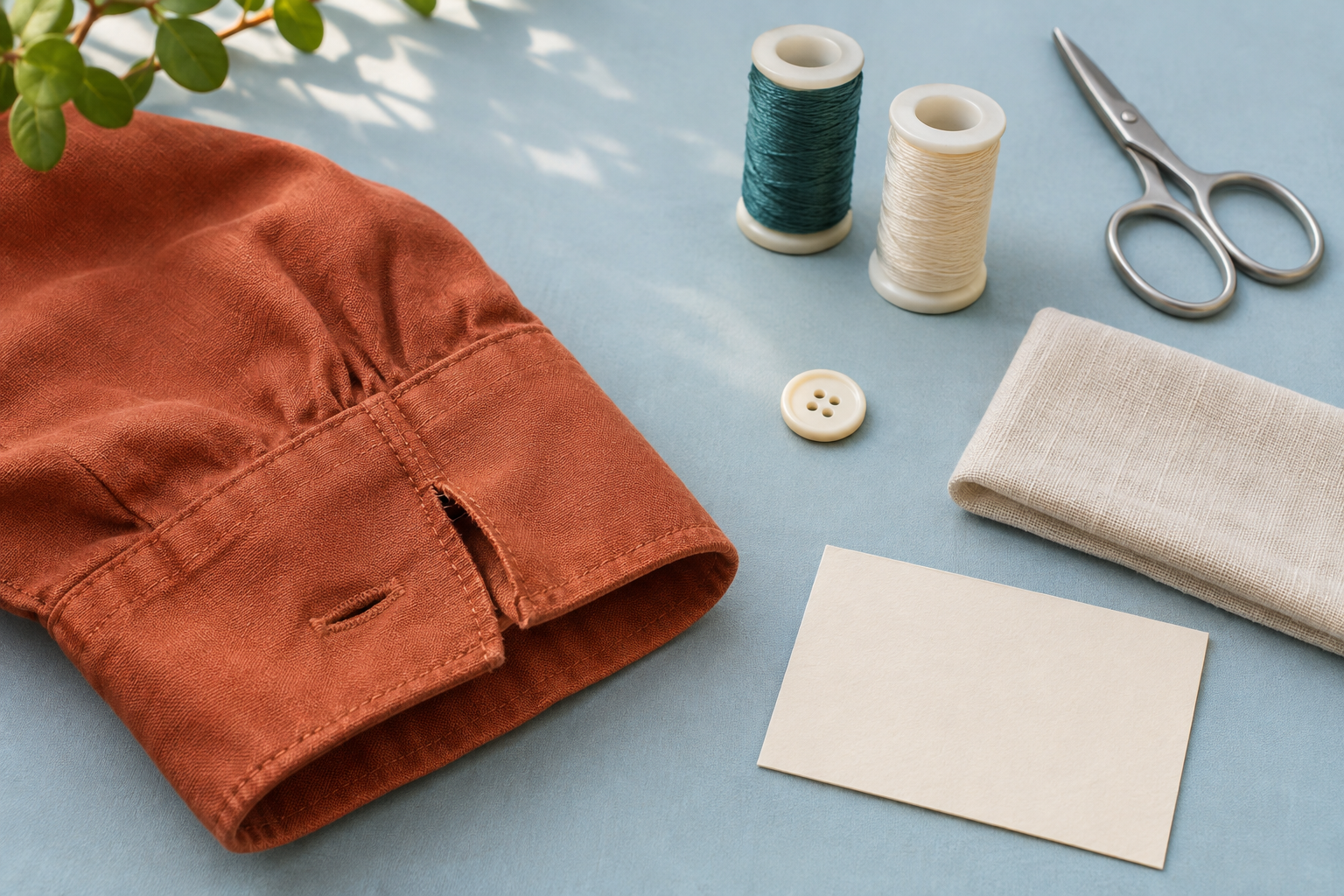
| Grey trousers | Going out | Button needs repair assessment | Ask an appropriate repair provider |
| Sentimental garment | Personal keepsake | Not part of current outfits | Known place outside everyday selection |
These categories do not judge a garment's value or its owner's taste. They prevent an unavailable item being counted among tomorrow morning's choices and stop things disappearing into a vague “miscellaneous” category. A status can change while the basic description stays the same, allowing the record to remain useful.
Separate keeping an item from using it daily
You might want to retain occasion wear or a meaningful garment despite seldom wearing it. Successful organisation does not require discarding it. If suitable alternative storage exists, it simply need not occupy the daily selection area. “I will not wear it this week” and “I no longer want it” are different decisions.
For uncertain items, create a short review list with a reason: current fit, unclear use, or unresolved care. Choose an appropriate time to revisit it. Avoid a permanent box of postponed decisions, but do not make elapsed time an automatic reason for donation without considering your circumstances and wishes.
Organise around your first morning question
If you begin with the day's activity, group work, home, and occasion clothes, for example. If garment type comes first, group shirts, trousers, and other types, then use colour within a group when helpful. Choose one memorable main rule instead of overlapping subdivisions that require fresh thought each time.
Do not move an item far away merely because its colour improves another row's photograph. Test the logic with three familiar pieces: can you predict their locations before opening the wardrobe? If your answer keeps changing, simplify the categories. An understandable working arrangement matters more than a system only its creator remembers.
Keep care status visible
Establish a route for clothes requiring washing, other care, or repair according to their instructions, separate from ready-to-wear items. Do not interpret care symbols by guesswork or plan an outfit around an unfinished task. Record the required action clearly so the garment does not accidentally rejoin the available group.
After completing the required care, return the item to its category and update its status. If specialist work is needed, record the question or task rather than attempting an unfamiliar repair. A smaller set of genuinely available garments is clearer than a long list containing pieces you cannot currently use.
Check combinations using what you own
Choose one realistic situation, then identify the pieces you would wear together from your current wardrobe. Do not assume every shirt works with every pair of trousers merely because their counts match. Record a combination you have tried or personally checked, including relevant accessories, without presenting it as a fashion rule for everyone.
A description such as “striped shirt with navy trousers” can replace a complete photo session. If one component is not ready, mark that limitation rather than presenting the outfit as available. This exercise can reveal a specific need—or show that the difficulty is unfinished care rather than insufficient clothing.
A fictional inventory of twelve pieces
Suppose someone inventories twelve items within work clothing alone. Seven are ready, three need care, and two require a decision about suitability. The total is 7 + 3 + 2 = 12, but twelve pieces are not currently ready. Nor can that item count be directly converted into an equal number of independent outfits.
The person places the seven in the selection group, plans the three care tasks according to their instructions, and considers the remaining two without rushing. After checking useful combinations, they record the options confirmed. If care is completed on two of the three items, ready pieces rise to nine, with one still needing care and two under review. Nothing was purchased to make the inventory clearer.
These are teaching figures, not a prescription for an ideal wardrobe size. Nine pieces do not necessarily mean nine days of clothing. The example also does not establish that anyone should buy or discard a particular number. Its purpose is to separate total ownership from actual availability.
Choose containers after defining their contents
If a container is needed, first establish what it will hold, how you will identify its contents, and how items will be returned. Try suitable equipment you already have and the space available before buying a matching set. A clearer division within a drawer may suffice, while a particular garment may require a different storage method under its instructions.
Use meaningful descriptions such as “cooler-weather clothes,” rather than an unexplained number. Update the description when contents change. Do not fill spaces merely to fill them, or modify furniture and load capacity based on this guide. Installation or stability questions belong with product instructions and qualified assistance where needed.
Agree boundaries in a shared wardrobe
Identify each person's area and any shared area. Agree how clothing is returned and who follows up unresolved tasks. Do not move someone else's possessions into donation, repair, or remote storage without their agreement, even when that appears tidier to you.
Make labels understandable to the people using them and consider their reach, movement, and preferences. The system fails if someone must ask another person where every item belongs. Two sections can use different arrangements provided each remains understandable and does not obstruct the other.
Evaluate the arrangement during real use
After a period you choose, ask which item you could not find, which group collapses when one piece is removed, and which step causes clothes to remain unreturned. Adjust one cause and observe the result instead of reorganising the entire wardrobe every time.
A tidy photograph alone is not an adequate success test. The practical test is finding a suitable option and returning it to a known place while unavailable items remain distinguishable. When work, seasons, or household needs change, revisit the categories rather than preserving a plan that no longer serves daily life.
If a repeated gap emerges, describe the need before naming a product: a garment for a particular activity or a way to retrieve an existing group more easily. Check the inventory before purchasing and make sure an alternative is not in the laundry or another location. This separates buying decisions from temporary enthusiasm for tidying.
End-of-session checklist
- A defined category is finished and returned to known locations.
- Ready items are distinguishable from care and decision tasks.
- Garment instructions remain the reference for storage methods.
- Realistic combinations are recorded without equating item counts with outfits.
- Deferred items have next actions rather than disappearing into an unnamed box.
- No automatic purchases or disposal of another person's belongings occurred.
Sources and transparency
The two linked pages were read on 1 November 2026. The inventory, table, arithmetic, and decision workflow are independently constructed illustrations, not wardrobe or product tests. The generated image depicts an imaginary wardrobe, not a before-and-after result. This content was prepared with AI assistance and has not received independent human editorial review.