Ask what a fabric is, and the answer might be cotton, jersey, satin, or a blend with several percentages. Those descriptions do not all refer to the same thing. Some identify fibres; others describe construction or appearance. Separating these layers makes comparison more useful than expecting one familiar word to explain comfort, durability, and care.
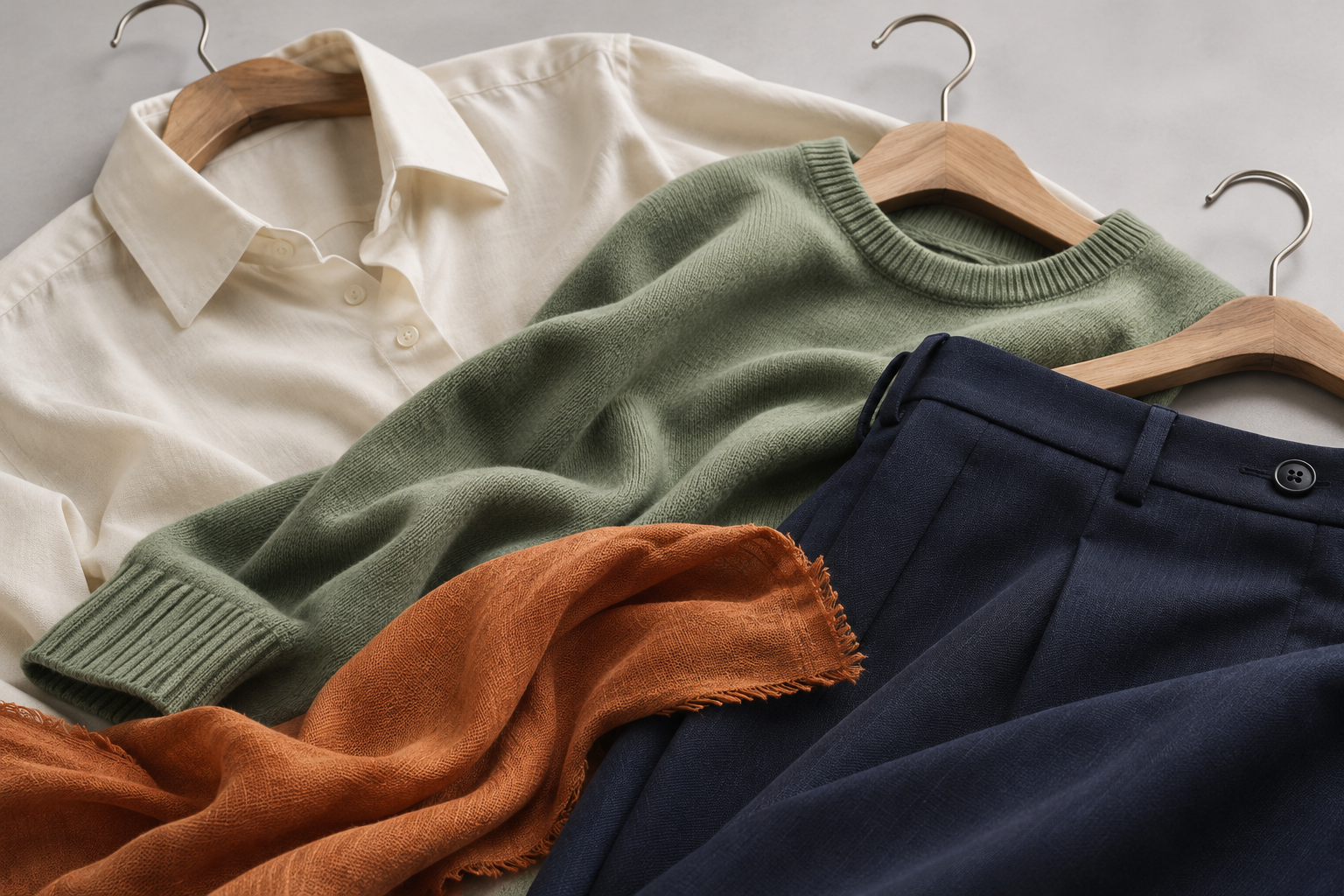
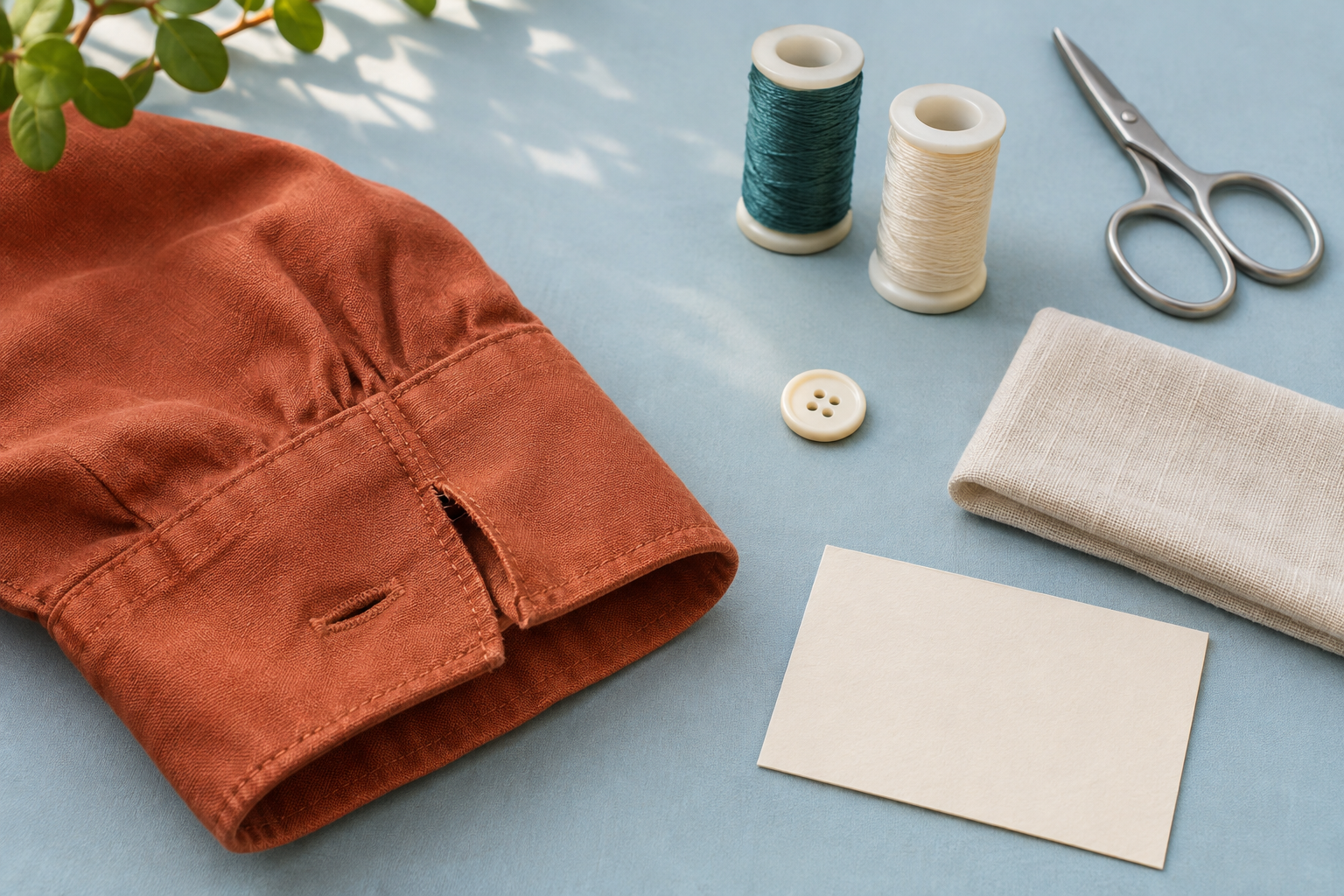
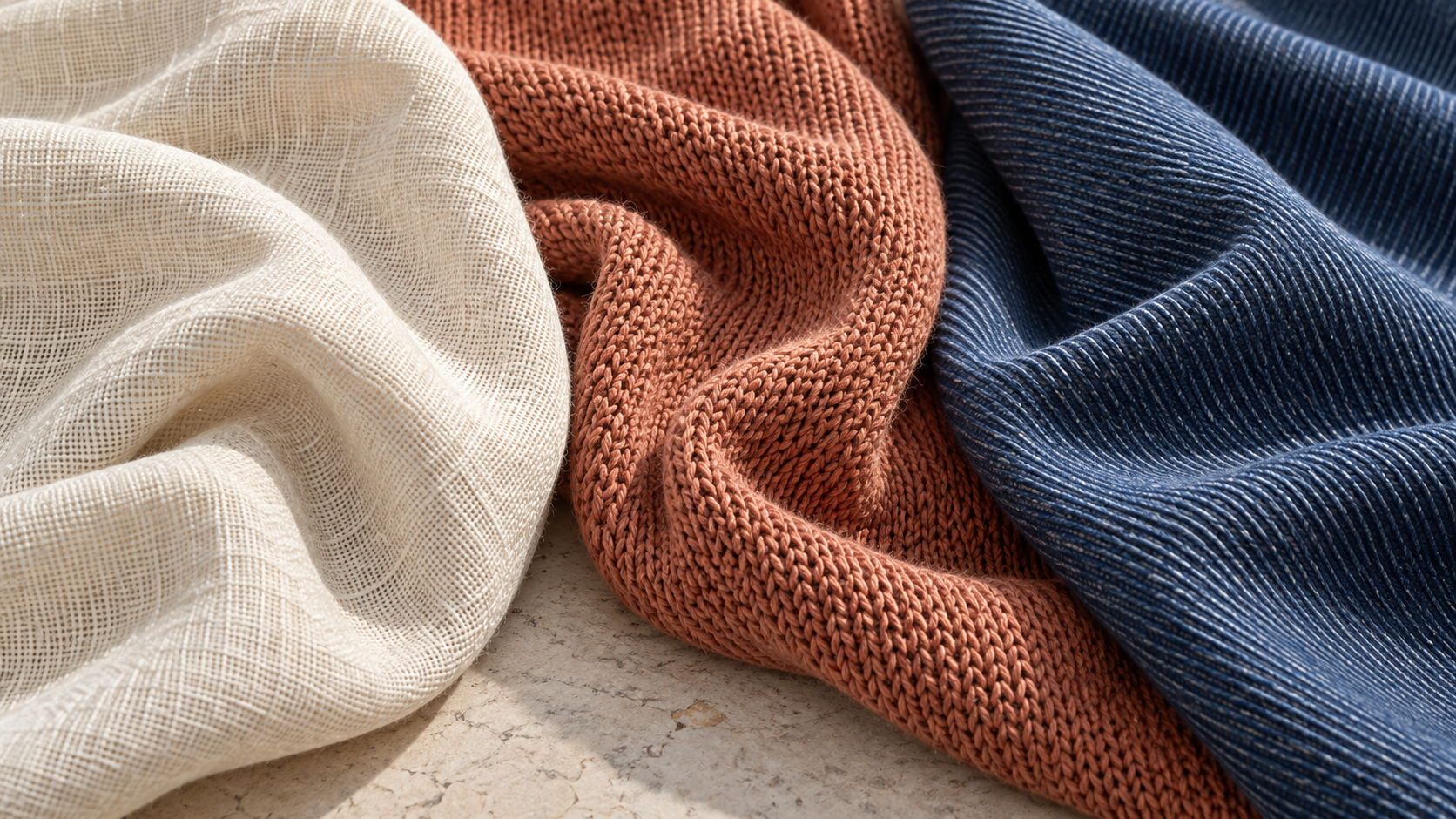
This guide offers a practical way to read descriptions and assess suitability. It does not rank one fibre as universally best, claim to have tested products, or guarantee lifespan. Examples are fictional. The generated illustration shows contrasting textures, not certified microscopy establishing fibre composition.
Separate fibre, construction, and the finished item
Start with three questions: what fibres are listed, how is the fabric constructed, and how is it used in this item? Knowing that cotton appears in a description still leaves questions about thickness, lining, cut, and care before you can judge a shirt, trousers, or furnishing.
The National Cotton Council manufacturing guide explains woven and knitted construction, including plain, twill, and satin structures.
Use that distinction to improve your question. Instead of asking whether satin is “natural”, ask for this item's fibre composition. Instead of asking whether cotton “stretches”, ask about the specific construction, blend, and movement you require. A construction name should not be treated as a complete fibre declaration.
Read composition rather than the sales headline
The FTC textile and wool labelling guide explains fibre disclosures and product information within United States rules.
That reference helps identify useful information; it is not a statement of legal requirements everywhere. Look for the manufacturer or seller's composition details and whether they distinguish the outer fabric, lining, or other components. A short shop title may leave those questions unanswered. Ask for missing information rather than guessing from colour, price, or a photograph.
You do not need to memorise an entire fibre dictionary. Begin with the names on the actual products being compared, then consult a reliable explanation for unfamiliar terms. Familiarity, luxury-sounding wording, and attractive packaging are not automatic evidence of comfort or quality.
A comparison table that keeps the layers separate
| Layer | Information to record | What it does not establish alone |
|---|---|---|
| Fibres | Declared components and percentages | Good construction or suitable fit |
| Fabric construction | Woven or knitted structure and its description | Complete fibre composition |
| Appearance and feel | Observed sheen, thickness, or drape | Long-term performance or laboratory identification |
| Finished item | Lining, seams, cut, and care instructions | Identical behaviour from every item using similar material |
Define the intended use first
Write where you will wear the item, what movement it requires, and how you can care for it. A daily shirt within an established laundry routine raises different questions from an occasional outfit. Pick three practical needs, such as movement, coverage, and manageable care, before comparing fabrics in the abstract.
Professional or protective clothing requires its own appropriate specifications. Do not use this general shopping workflow to infer protection from sunlight, flame, or a skin-related problem from a fibre name or colour. Those claims need suitable evidence and, where relevant, specialist advice.
Check movement without damaging the item
During a permitted fitting, try movements that matter: sitting, lifting your arms, or walking. Notice where the garment pulls and whether you can move as intended. Standing still in front of a mirror provides only part of the picture. A problem may come from cut or size rather than the fibre itself.
Do not forcefully stretch a sample to prove flexibility. When buying fabric for sewing, ask for a sample and an appropriate assessment method, and consult the pattern's requirements. Movement in one direction does not establish that a material suits every design or intended use.
Observe drape, thickness, and coverage
Look at how the garment hangs and, if a fitting is available, how it behaves when worn. Does it create the shape you want? Would your use require a lining or an additional layer? Record these as observations about a particular item, not conclusions about all shiny or lightweight fabrics.
Consider ordinary lighting rather than relying only on a styled shop image. When buying online, request clear information about lining, thickness, or detail photographs where necessary. Do not invent a weight or transparency percentage from appearance. Information that is unavailable should remain explicitly uncertain.
Blends are not a formula for guaranteed performance
Suppose a fictional label lists 70% of one fibre and 30% of another. That is a declared composition, not a promise that comfort or durability equals a weighted average of two separate materials. Percentages alone do not produce a verified drying time, lifespan, or suitable washing temperature.
Compare the blend in the context of the finished item and its instructions. Two garments with identical percentages may differ in construction and cut. Avoid replacing product assessment with rules such as “every blend at this ratio is comfortable” or “every blend is lower quality”.
Care belongs in the purchase decision
Read the item's care instructions before paying. Do not select a wash programme from the fibre name alone or assume lining, decoration, and finishing are irrelevant. If the label is unclear, seek clarification rather than improvising a temperature or cleaning treatment.
Ask whether the required routine is realistic for your time and available drying space. An attractive item may demand care that does not fit your routine. That is a practical mismatch, not proof of an inferior fabric. A private photograph of the care label can be useful where taking one is permitted.
A fictional comparison between two shirts
A shopper compares two work shirts. The first has a clear composition description, but its movement has not been checked. The second feels appealing, yet the listing does not explain the lining. Neither has earned an automatic win: complete documentation does not replace fit, and pleasant feel does not answer a composition question.
The shopper tries permitted movements in the first, asks about the missing detail in the second, and reads care instructions for both. If sitting exposes an uncomfortable fit, the next question concerns cut and size rather than immediately blaming the fibre. A remaining important uncertainty can justify postponing the choice.
After purchase and care according to instructions, personal notes might say “worked for my daily movements” or “required more care time than expected”. Such observations are useful, but they are not laboratory tests or guarantees for another product with the same material name.
Additional questions when buying fabric by length
Ask about fabric width, pattern direction, preparation instructions, and the requirements of the sewing design. This guide does not calculate a universal purchase length. Cutting layout, size, pattern matching, and construction details change the calculation; consult the pattern or tailor before ordering a final amount.
Label a supplied sample with a simple reference and link it to the supplier's description and date. An attractive unidentified sample can be difficult to order again accurately. Do not assume an unknown remnant can be identified reliably through touch alone.
Avoid misleading home identification tests
Do not burn fabric or apply chemicals to identify fibres from general online instructions. Those actions are unnecessary for an ordinary purchase decision and may damage the sample or create hazards. If composition matters and the supplier cannot establish it, request suitable documentation or assessment from a qualified provider.
Similarly, broad words such as “luxury” or “sustainable” do not answer every question. Ask what a specific claim means, its scope, and what supports it. Do not add your own environmental or health conclusion. An unresolved claim can remain unresolved while you compare other clearly documented features.
Use previous experience to ask better questions
For a garment you already like, identify the specific reason: cut, feel, or convenient care. Read its composition if available, but do not assume identical ingredients guarantee an identical experience. Use it as a reference while keeping differences in construction and design visible.
For an item that disappointed you, record the observed problem instead of rejecting an entire fabric family. “This cut restricted me when sitting” is more useful for the next fitting than “this material is bad”. Keep a personal observation separate from a general conclusion that would require broader evidence.
Final checklist
- The declared composition is clear, including separate components where relevant.
- Construction names are not mistaken for fibre names.
- Movement and appearance suit the intended use within the limits of the available fitting.
- Care instructions are understood and practical.
- Missing information is listed rather than guessed.
- Current purchase and return terms are checked, especially for cut fabric or altered items.
Sources and transparency
Linked sources were read on 1 November 2026. The comparison framework and fictional examples are original, not product tests or quality certifications. The AI-generated illustration conveys texture and structure, not verified fibre composition. This content was prepared with AI assistance and has not received independent human editorial review.