The right furniture does more than look appealing in a photograph. It needs to serve a purpose, fit the space and daily movement, arrive safely, and have manageable care requirements. Working through those questions before shopping gives you a clearer comparison than choosing a colour first and solving everything else after paying.
This is a guide to ordinary household selection, not an engineering assessment or installation procedure. Dimensions and examples are fictional, not measurements of a real home or mandatory circulation limits. Follow product instructions and use qualified help when delivery, assembly, or securing the furniture requires it.
Define the function you want to improve
Begin with a sentence such as “I need seating for two while keeping the doorway usable” or “I need accessible storage for these items”. A functional question helps establish whether you need another item at all, or whether rearranging existing furniture would solve the problem.
Identify users and routines: who sits, who opens drawers, and when the room becomes busy. Do not assume one adult's requirements match those of a child or someone using a mobility aid. A specialist need belongs in the comparison from the outset, not after selecting an attractive shape.
Measure the usable setting, not only one wall
The IKEA room-measurement guide records dimensions, openings, fixed features, and door swings.
Use that documentation principle without treating the source as a brand recommendation or copying its sample dimensions. Draw a simple plan with your own measurements and units. Mark doors, windows, and furniture that will remain. If an area cannot be measured safely, request suitable help rather than climbing on furniture or moving heavy items alone.
Keep missing measurements visible as unresolved questions. Record both closed dimensions and the space required to operate moving parts according to product specifications. An extending table or reclining chair raises questions that a still photograph cannot answer. Do not block features or routes you need; seek appropriate guidance where requirements are unclear.
Try a footprint before buying
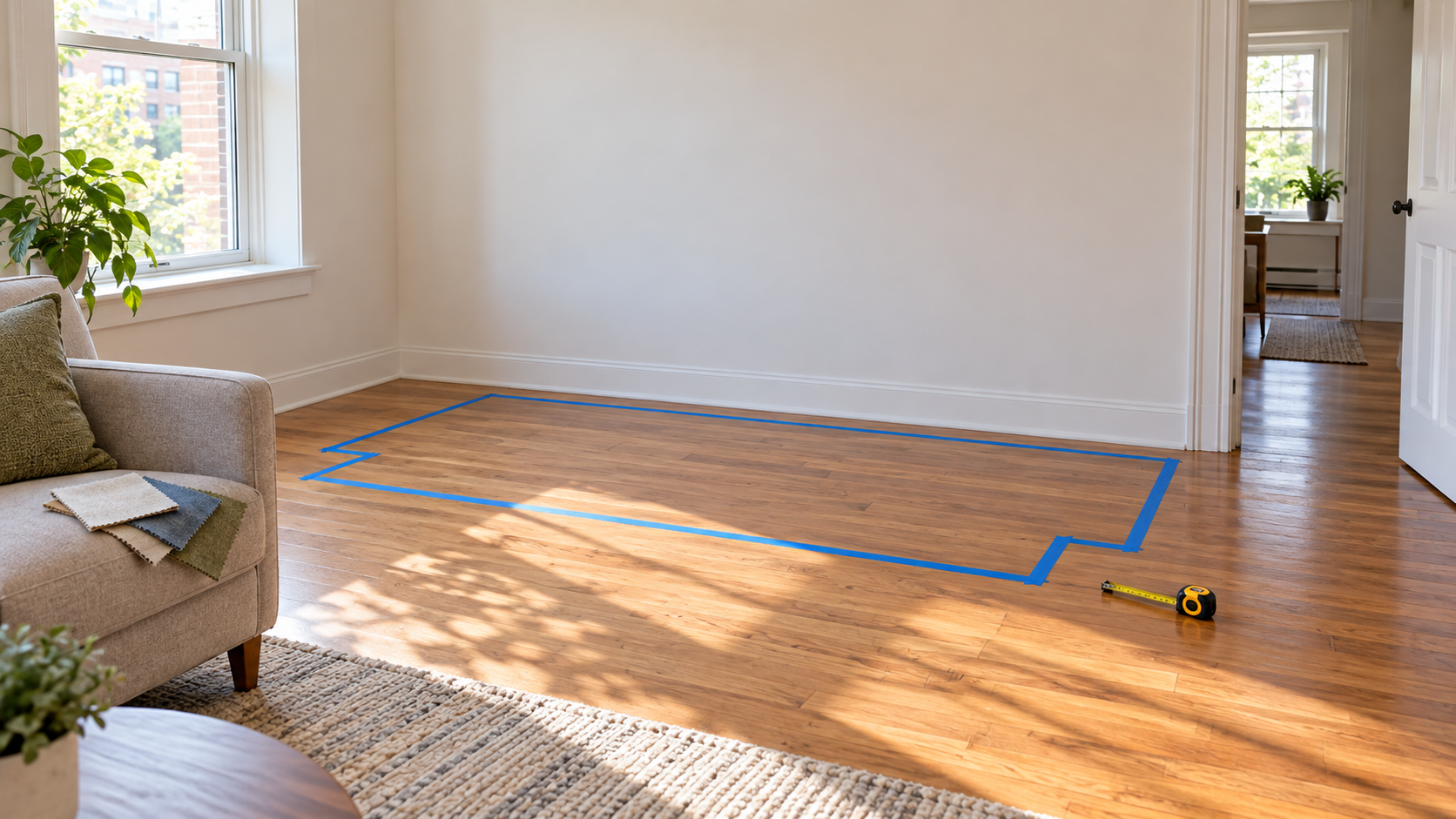
A drawing or safe temporary floor representation can help you understand the relationship between size and movement. It must not damage the surface or create a trip hazard. If using removable tape, verify its suitability for the floor and remove it afterwards. This is space planning, not a structural or safety test.
Imagine ordinary use: standing from the seat, walking to the window, and opening storage. Involve the people who use the room instead of judging only from the entrance. A flat outline does not fully show height or visual impact, so keep that limitation in mind.
A simple calculation—and its limits
Suppose a wall is 3 metres long and a sofa is 2.1 metres wide. The arithmetic leaves 0.9 metres along that wall, or 0.45 metres at each end if centred. This subtraction does not establish suitable circulation or door access. It describes only the difference between two widths.
You still need depth, opening positions, furniture opposite, and user requirements. If a door swings through the remaining area, “the sofa is narrower than the wall” does not solve the problem. These numbers demonstrate a question, not a universal rule about adequate clearance.
Review delivery access with the delivery provider
Ask about packaged dimensions, component count, and delivery method rather than only the final assembled size. Describe stairs, lifts, corners, or doorways that may affect access. Ask the provider what information is needed to assess the route before confirming the order.
Comparing doorway width with one furniture dimension is not a complete access assessment. Turning space, packaging, and assembly arrangements matter to the responsible provider. This guide does not instruct you to lift through windows, remove doors, or perform unsupported dismantling to reach a room.
Include stability and safety requirements in the purchase
Health Canada tip-over guidance emphasises manufacturer instructions and precautions; apparent stability alone is insufficient.
Ask about requirements before buying rather than substituting weight or size for compliance with instructions. If securing or specialist assembly is required, arrange it with a qualified person for the product and location. No screw type, drilling method, or assessment of your wall is supplied here.
If an essential requirement cannot be fulfilled safely, do not disregard it because the furniture looks good or is discounted. The unresolved requirement is part of the decision, not a minor detail to be left until after delivery.
Assess ordinary use in a showroom
Where permitted, try sitting and standing or operating a component in its intended way. Observe whether handles and controls are accessible to you. Do not climb on furniture or apply unauthorised loads to prove durability; those are not appropriate consumer checks.
Ask about intended-use limits, care, and current warranty coverage. A few minutes cannot establish years of comfort or service life. “The seat height suited me during the trial” is more accurate than “comfortable for everyone”; a smooth showroom movement is not a long-term guarantee.
Compare a short list
| Criterion | Question | Useful record |
|---|---|---|
| Function | Does it solve the identified need? | Yes or no, with a reason |
| Space | What are its closed and operating dimensions? | Documented measurements and remaining questions |
| Delivery | Have access, packaging, and assembly been assessed? | Confirmation from the responsible provider |
| Safety and care | Can manufacturer requirements be met? | A clear plan before use |
| Cost | What essential services are additional? | A comparable total |
Material and colour do not establish quality alone
Read the product's material, covering, and care descriptions. Words such as “wood” and “fabric”, or a glossy photograph, do not establish durability. Ask which components can be maintained or replaced according to the supplier, without assuming future spare-part availability that has not been stated.
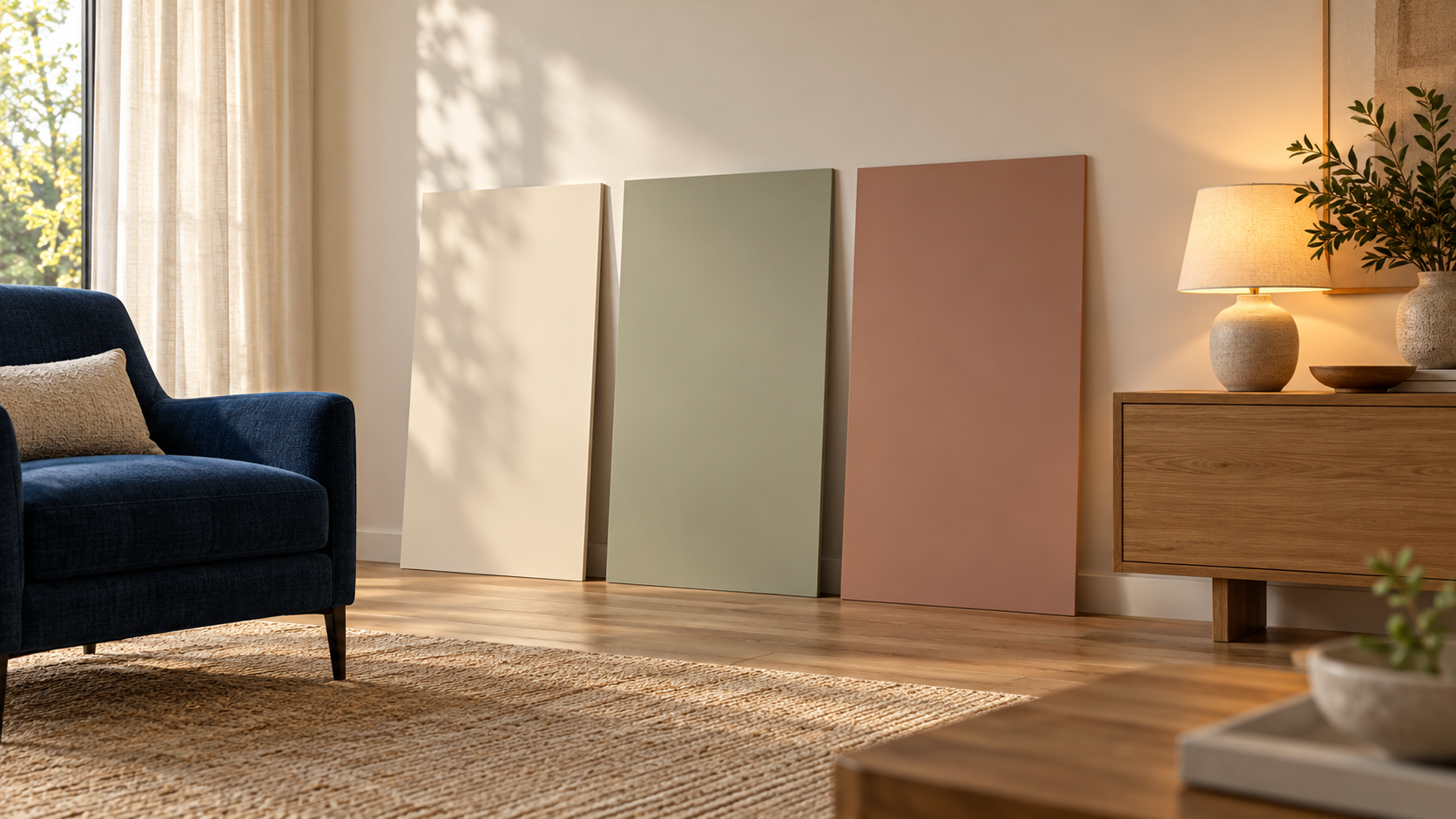
If a sample is available, view it beside the elements that will stay in the room under normal lighting. Screens help narrow an initial choice but cannot confirm an exact match. Buying an entire matching collection is not essential; each item should have a useful role and work for you in combination.
Calculate the complete cost
List the furniture, delivery, assembly, and necessary services separately, then total the amount actually payable. Do not compare an inclusive offer with one excluding services without acknowledging the difference. Check current seller terms for scheduling, returns, and customised pieces rather than assuming universal rules.
A limited-time discount should not erase an unresolved measurement or safety question. Keeping current furniture temporarily may be preferable to buying something that requires unexpected costs or alterations. Consider the ability to maintain and use the item, not only its initial price.
Used furniture needs verifiable information
Request condition details, measurements, and product instructions where available, and inspect only in permitted, safe ways. Look for model identification and relevant official recall information. Missing paperwork does not prove a particular danger, but it leaves questions that should remain visible.
“Lightly used” is not a substitute for knowing about missing components or previous repairs. If necessary work is beyond your ability to assess, consult a suitable professional before committing. This article does not provide pest-treatment instructions or methods for repairing damaged structures at home.
Before and after delivery
Prepare the work area with the service provider without taking on unsuitable heavy lifting. Check the delivered item, components, and instructions under the service's terms. Record clear discrepancies rather than assuming assembly will resolve unexplained missing parts.
After approved installation, retain care and follow-up information. Reconsider use if the room arrangement or users change. “Purchased” is not the end of the decision: the item should continue serving the purpose that justified it.
Make online uncertainties explicit
Separate documented dimensions from qualities a screen cannot confirm. Written sizes can be compared with your plan; seating feel or texture may require a trial or sample. A general star rating does not close that gap when the reviewer's needs differ.
Send specific questions and keep replies with the product link and date. If a seller says “fits most homes”, ask again for the exact dimension or component you need. A broad reassurance does not settle a narrow delivery route or specialist use requirement.
Include the furniture you are keeping
Measure retained pieces and put them on the plan before evaluating additions. Individually suitable products can create a crowded combination. An advertising photograph need not use your dimensions or contain the same number of objects, even when its style looks similar.
Work in stages: resolve the main need, then assess extras after using the space. Identify what will be removed or reused and who will move it safely. New furniture should not cause old pieces to accumulate in a route that needs to remain available.
Sources and transparency
Both sources were read on 1 November 2026. The worksheet and calculation are original decision aids, not engineering assessments or product tests. The generated sofa footprint does not certify dimensions for a particular home. This content was prepared with AI assistance without independent human editorial review.